Northriding, Johannesburg
010 019 0805078 098 9422info@leetech.co.za

OUR WORK

Our Projects

Explore Johannesburg TVET access automation, Riverton security and Kimberley fibre installation in the Northern Cape, alongside Leetech’s education-infrastructure summaries.

The Johannesburg TVET, Riverton and Kimberley fibre entries use supplied project photographs. The other two entries retain summaries from Leetech’s existing website and use clearly labelled conceptual illustrations. Context and objectives describe the work, not measured performance results.

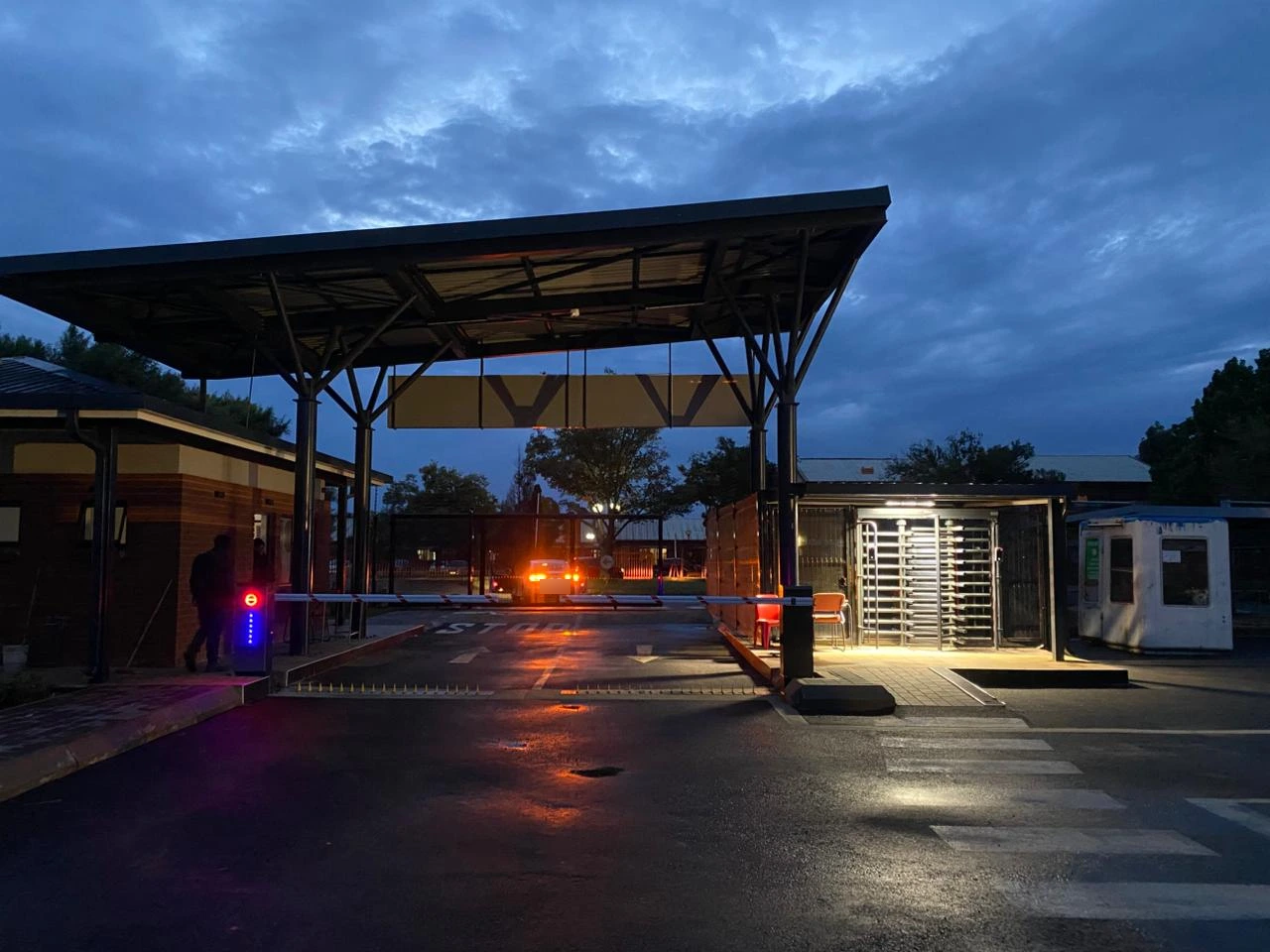
Project photograph of a Johannesburg TVET college entrance showing a boom gate and full-height pedestrian turnstiles
01 / TVET COLLEGE · JOHANNESBURGProject photograph · Boom gate & turnstile automation

Education Sector / Johannesburg

TVET College, Johannesburg — Integrated Security System

Integrated security at a Johannesburg TVET college, bringing together automated boom gate control for vehicle access and automated turnstiles for pedestrian entry. The supplied project photograph shows the campus entrance and its vehicle and pedestrian access points.

Project Scope:

  • Integrated campus entrance security system
  • Boom gate automation for vehicle access
  • Turnstile automation for pedestrian access

PROJECT CASE STUDY

Coordinating vehicle and pedestrian access at a Johannesburg TVET campus

Discuss a similar project ↗

The challenge

A TVET campus entrance accommodates both vehicle arrivals and pedestrian movement. These routes have distinct access needs, and the operational requirement is to coordinate entry at the campus entrance while accounting for how people move through the site.

The solution

The confirmed integrated security scope brings together automated boom gate control for vehicle access and automated turnstiles for pedestrian entry. Together, these components are intended to support controlled vehicle and pedestrian access at the entrance.

Implementation

The entrance photograph shows the vehicle boom gate and full-height pedestrian turnstiles together at the campus entry point. The supplied project description identifies automation of both access routes as the integrated security scope.

Outcomes & evidence

The documented configuration brings vehicle and pedestrian access into one entrance arrangement. Its intended value is coordinated, controlled entry for both routes, supporting the campus staff responsible for access management.

Evidence basis: Based on the supplied Johannesburg TVET project description and entrance photograph. Completion status and performance measurements have not been provided.

Explore sector context & planning considerations

Sector context

A TVET campus entrance handles both vehicle arrivals and pedestrian movement. At this Johannesburg college project, the entrance brings these two access routes together, with the boom gate serving the vehicle lane and turnstiles providing a dedicated pedestrian entry point.

Operational objectives

The integrated security scope focuses on boom gate and turnstile automation. Its purpose is to coordinate controlled vehicle and pedestrian access at the campus entrance. The photograph documents the installation setting; no completion date, equipment brand or measured security outcome is stated.

Planning for similar sites

For similar college entrances, the design should account for peak arrival periods, pedestrian routes and the procedures used by campus security staff. The access permissions, operating sequence and any additional integrations should be defined for each site rather than assumed from the photograph.
Site Security / Northern Cape

Riverton, Northern Cape — Security & Access Control

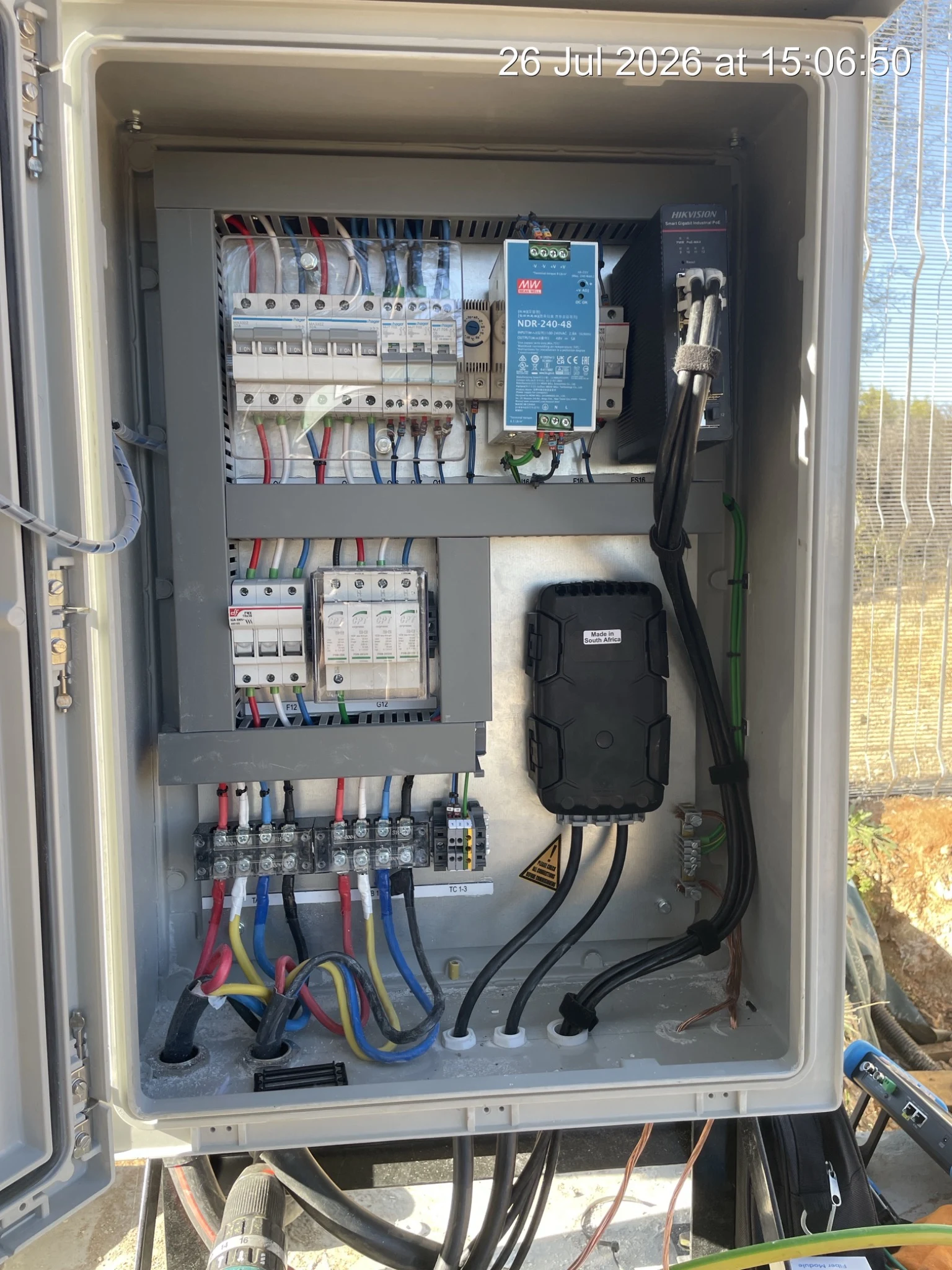
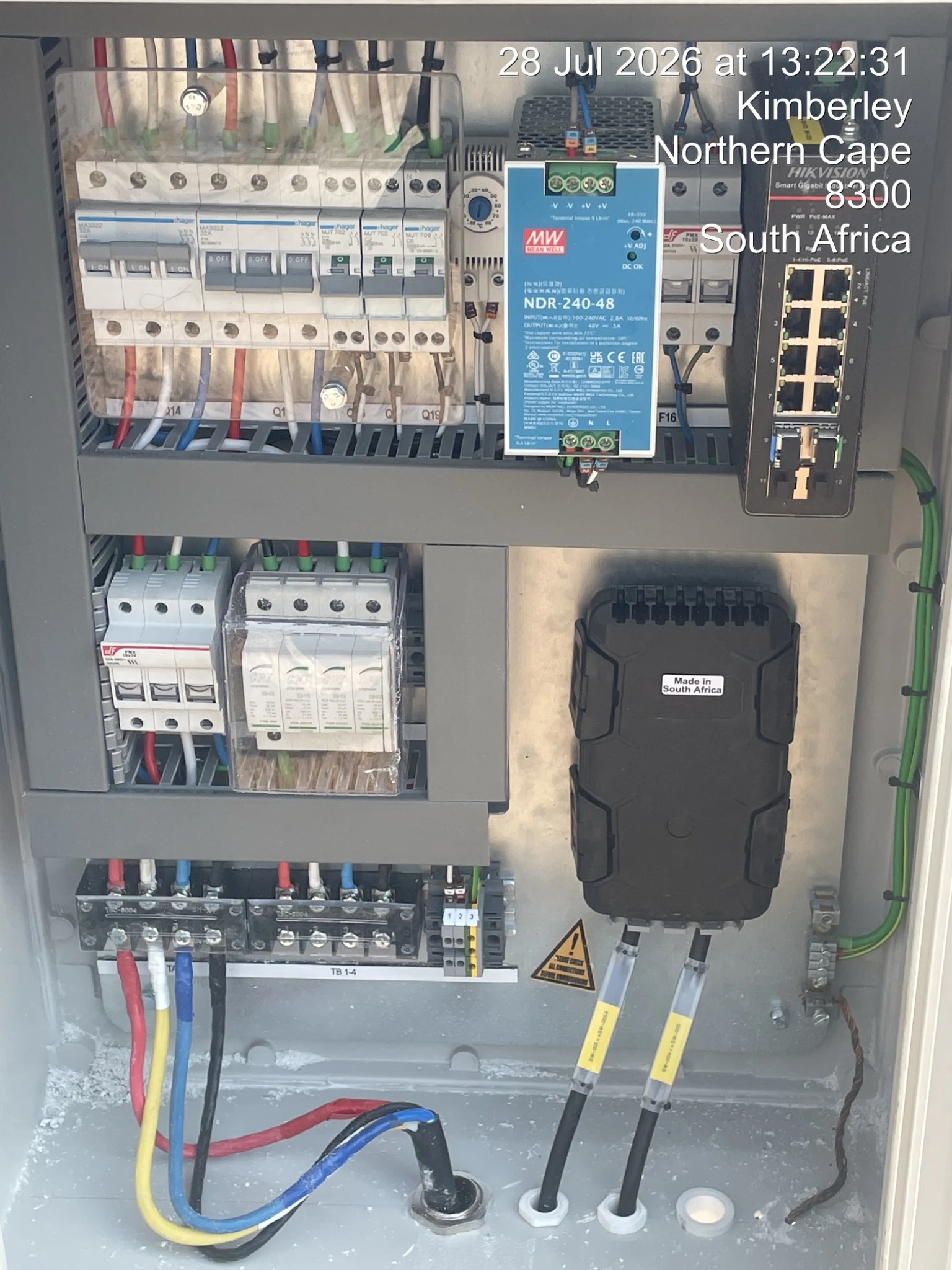
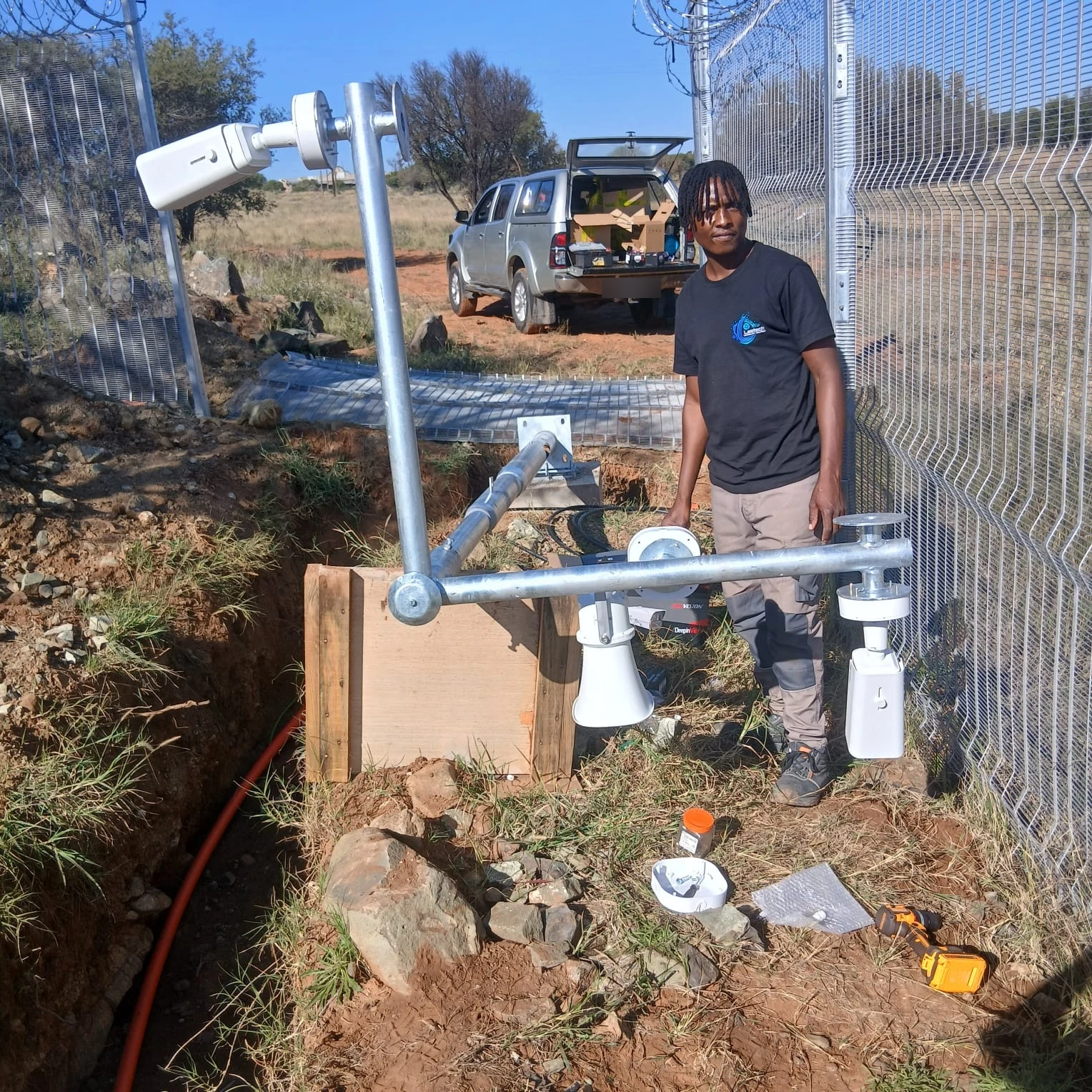
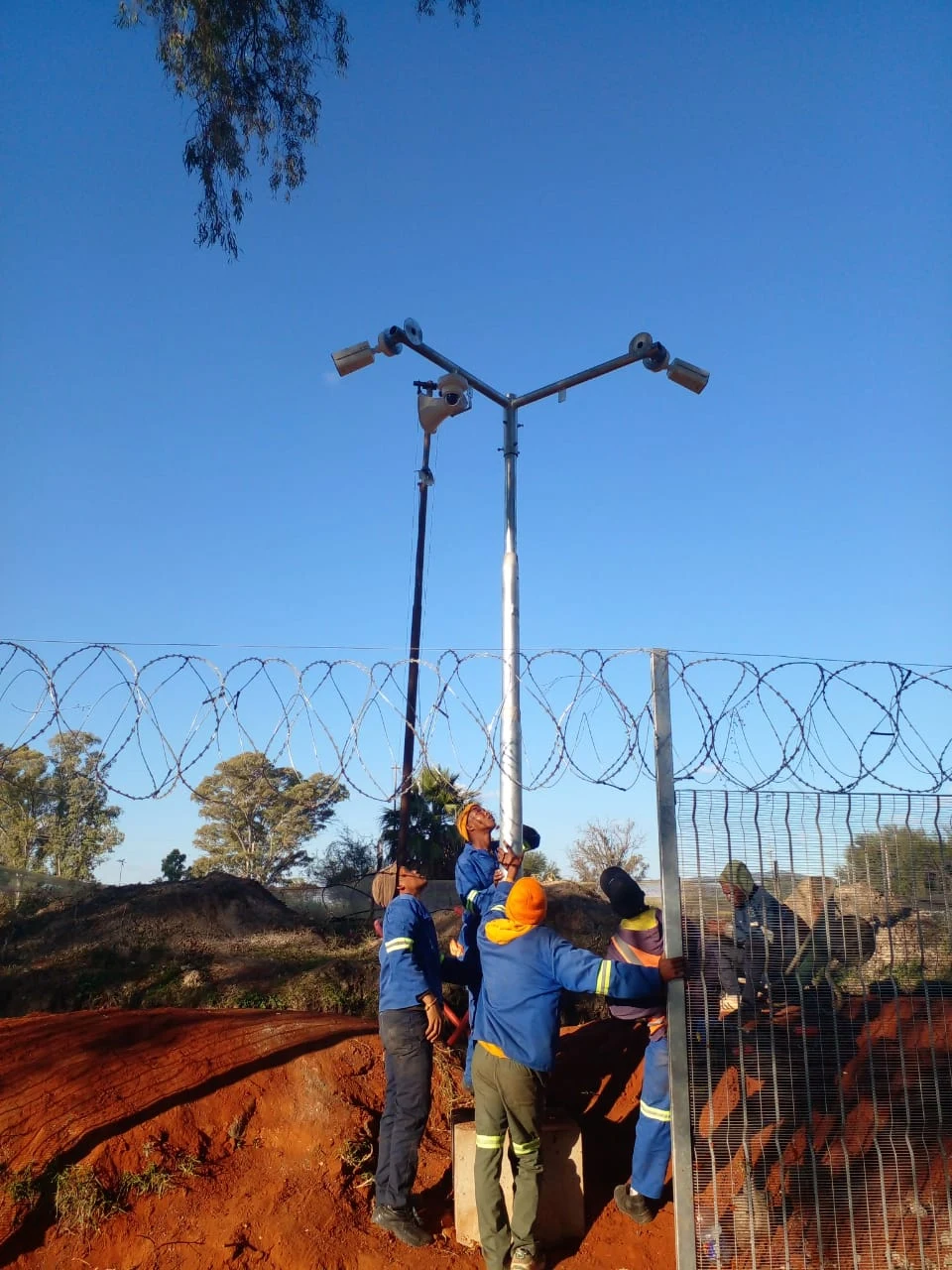
Security and access-control project work in Riverton, Northern Cape. The supplied site photographs document pole-mounted surveillance equipment, field cabinets and monitoring-system configuration, showing the installation work behind a coordinated site-security environment.

Project Scope:

  • Security and access-control project implementation
  • Pole-mounted surveillance equipment installation
  • Field equipment cabinets and associated power/network connections
  • Monitoring-system configuration

PROJECT CASE STUDY

Riverton security and access control: connecting perimeter oversight with controlled entry

Discuss a similar project ↗

The challenge

Outdoor perimeter environments require security arrangements that bring surveillance, site equipment, power and network connections together. At Riverton, the operational need is to support site oversight and controlled access through a coordinated security environment, with equipment and operator procedures suited to the setting.

The solution

The confirmed project scope is security and access control, with visible surveillance installation and configuration work. The intended solution brings pole-mounted surveillance equipment, field cabinets and monitoring configuration into a coordinated site-security arrangement. No particular access-device type or camera quantity is specified.

Implementation

The five photographs document camera-mounting work, pole-mounted equipment, field cabinets with power and network components, and monitoring-system configuration. Together, they show the field infrastructure and operator workspace involved in the installation.

Outcomes & evidence

The documented work links surveillance equipment, field power and network connections with monitoring configuration. The intended value is a coordinated foundation for site oversight and access management, rather than disconnected security components.

Evidence basis: Based on the supplied Riverton project description and five installation photographs. Configuration screens are blurred. Completion status and performance measurements have not been provided.

Explore sector context & planning considerations

Sector context

The supplied Riverton photographs show an outdoor perimeter setting with camera-mounting work, field equipment cabinets and a monitoring workspace. Security and access control in this type of environment depend on how site equipment, power and network connections are brought together for operational use.

Operational objectives

The project combines the user-confirmed security and access-control scope with visible surveillance installation and configuration work. The operational aim is a coordinated security environment that supports site oversight and controlled access. No specific access-device type, camera quantity, completion status or measured improvement is stated.

Planning for similar sites

For comparable outdoor sites, planning should address camera positioning, cable routes, cabinet access and the procedures used by authorised operators. Environmental exposure, power and connectivity requirements need site-specific review; the photographs alone do not establish equipment certification or regulatory compliance.

Network Infrastructure / Northern Cape

Fibre Installation — Kimberley, Northern Cape

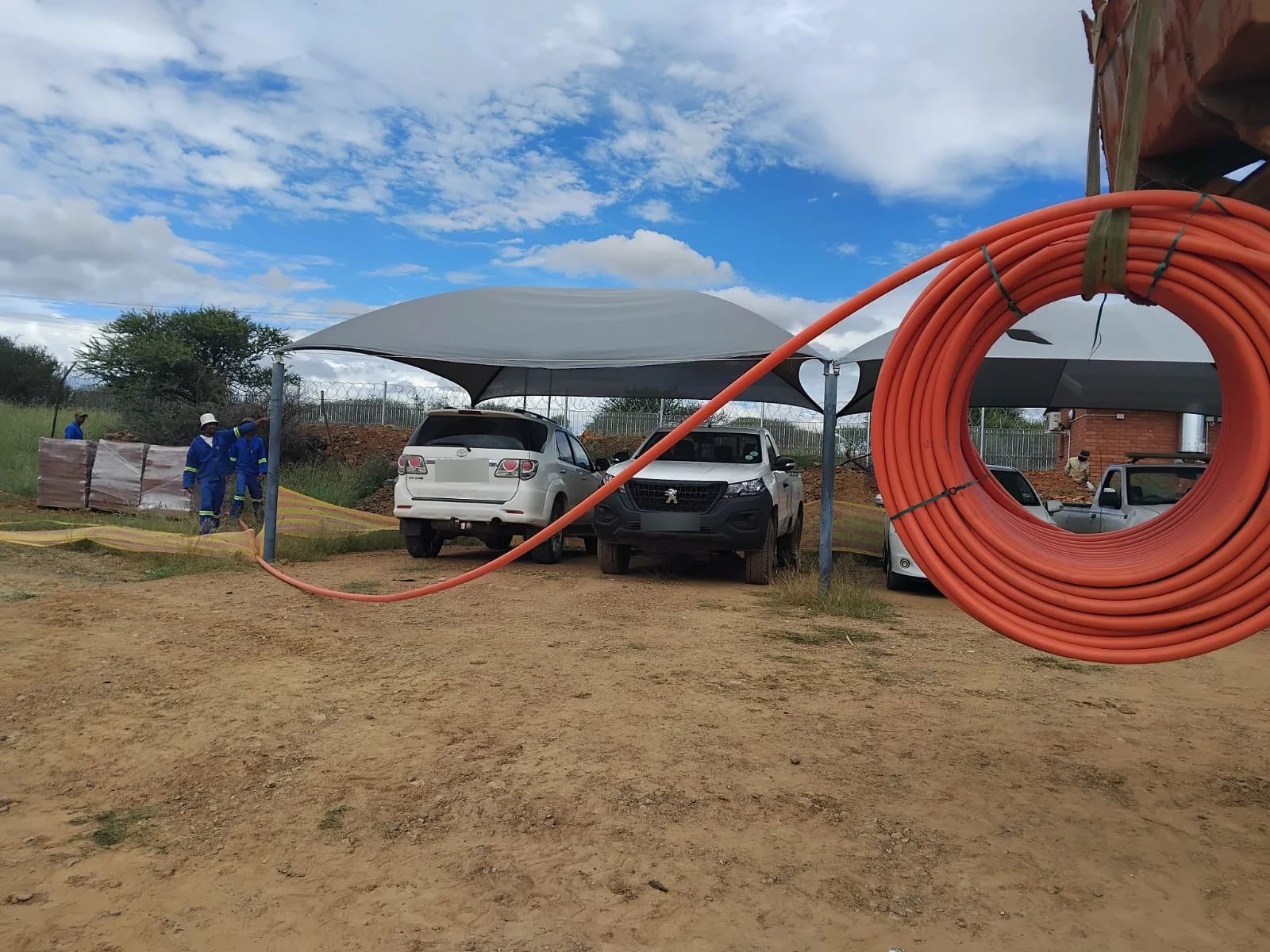
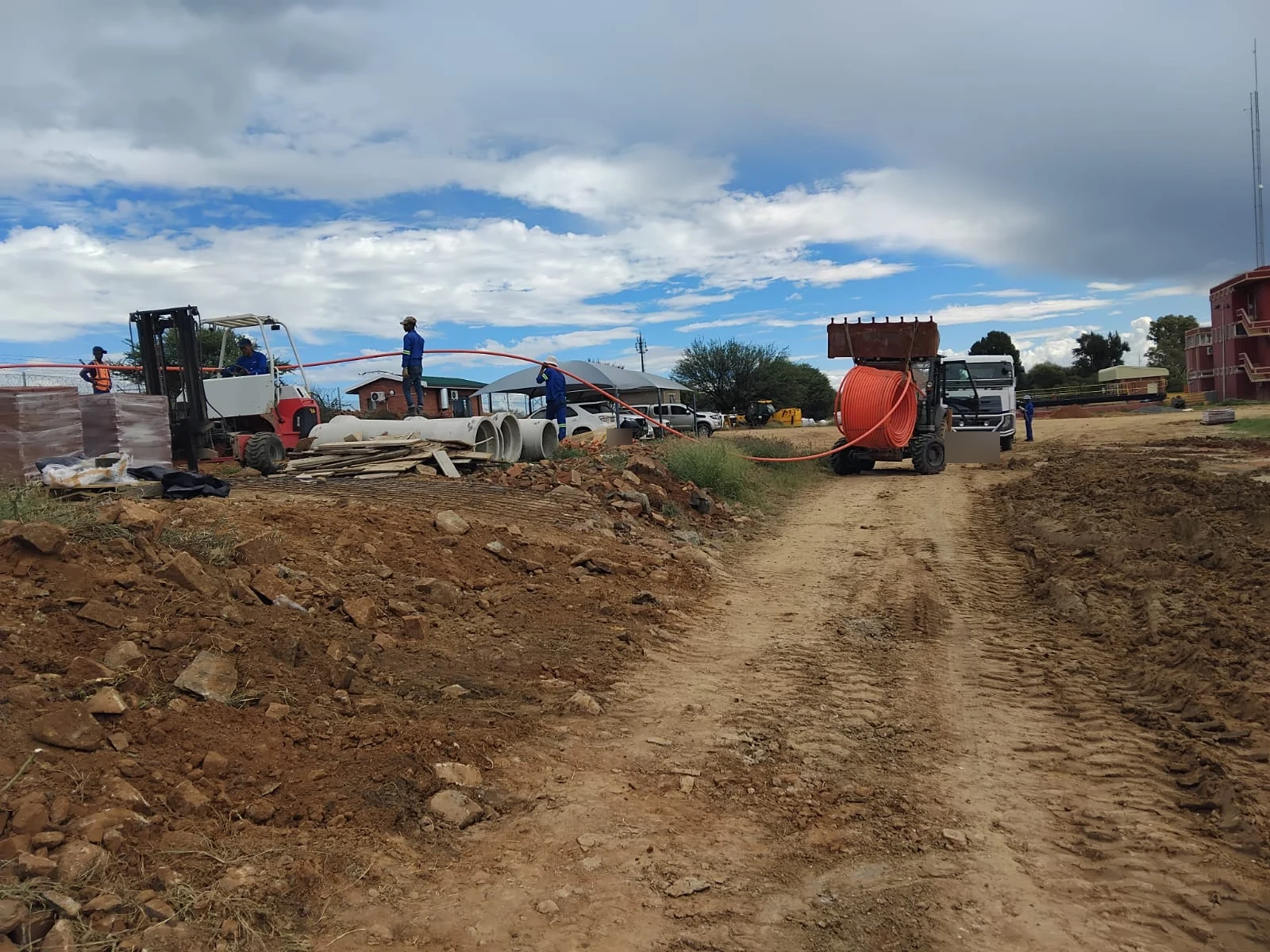
Fibre installation work in Kimberley, Northern Cape. These project photographs show orange ducting being handled and positioned at the site, with the installation team and equipment coordinating the route preparation.

Project Scope:

  • Fibre installation project work
  • Handling and positioning of ducting along the site route
  • Coordination of installation materials, crew and equipment

PROJECT CASE STUDY

Fibre installation work in Kimberley

Discuss a similar project ↗

The challenge

Fibre connectivity depends on a physical route that can be established in coordination with site activity, materials and equipment. For this Kimberley installation, the practical requirement is to handle and position ducting while coordinating work across the site.

The solution

Leetech’s confirmed project scope is fibre installation in Kimberley, Northern Cape. The documented scope includes handling and positioning ducting along the site route, with installation materials, crew and equipment coordinated at the work area. This represents physical route preparation for fibre connectivity; no additional cable, termination or network scope is confirmed.

Implementation

The two project photographs show orange ducting being handled and positioned with the installation team and equipment at the work area. They record the route-preparation stage of the fibre installation, rather than cable termination or network commissioning.

Outcomes & evidence

The photographs document progress on the physical route preparation that supports fibre connectivity. Ducting handling and positioning are visible; a completed or commissioned fibre service is not established by this evidence.

Evidence basis: Based on the supplied Kimberley fibre-installation description and two photographs. Cable specifications, splicing and commissioning results have not been provided.

Explore sector context & planning considerations

Sector context

Fibre infrastructure installation requires coordination between the planned route, installation materials and activity at the work site. The supplied Kimberley photographs show the team handling orange ducting and positioning it across the installation area with site equipment.

Operational objectives

The user-confirmed project scope is fibre installation in Kimberley, Northern Cape. The work is intended to establish the physical route for fibre connectivity. The photographs document installation activity; they do not establish cable length, fibre specification, splicing completion or commissioned network performance.

Planning for similar sites

For comparable fibre installations, scope development should address the approved route, existing services, access to the work area and how ducting is handled and protected. Cable placement, termination and testing requirements should be agreed for the actual project rather than inferred from these site photographs.

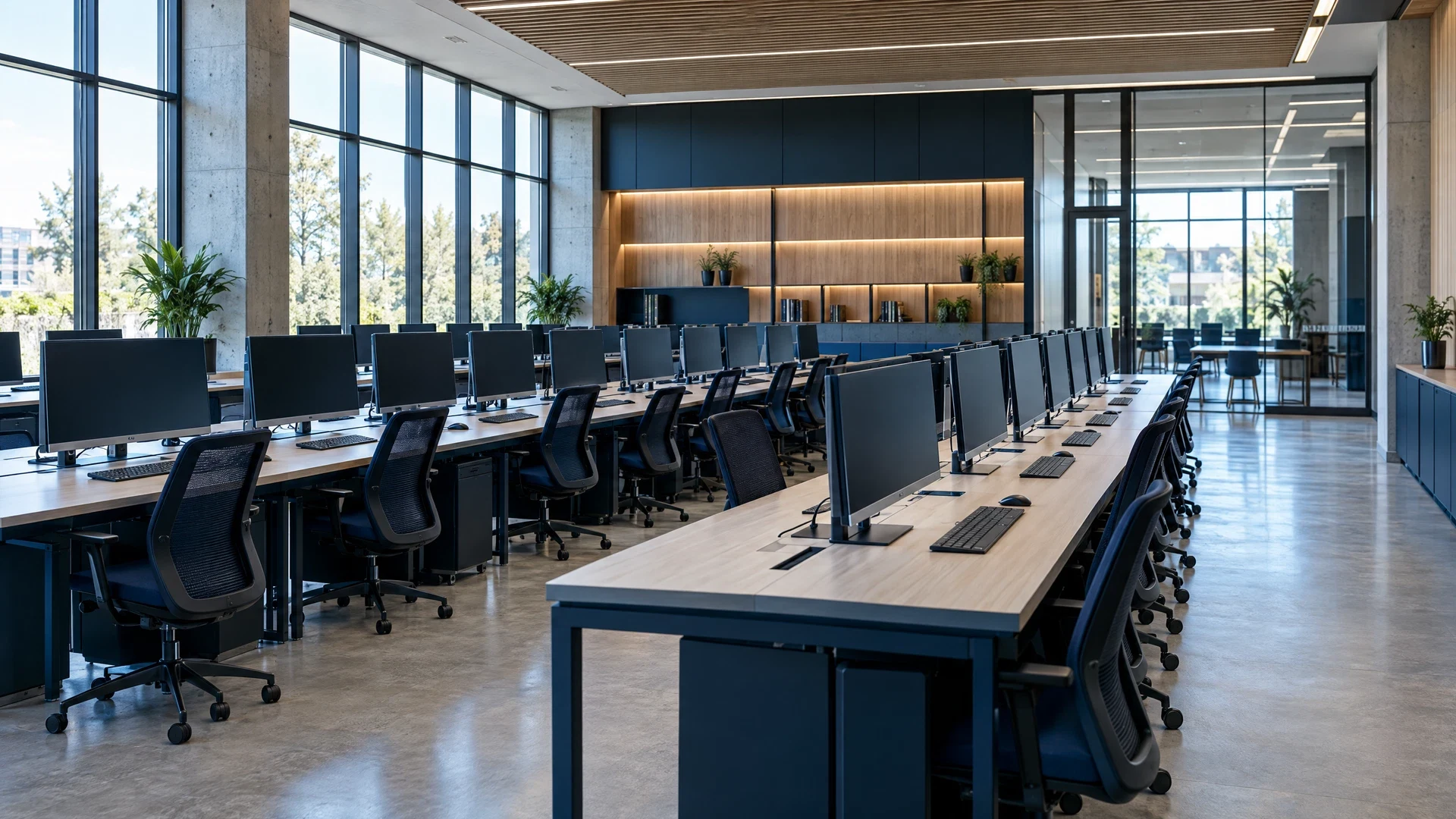
Conceptual editorial illustration: TVET College Computer Lab04 / EDUCATION SECTORConceptual project illustration

Education Sector

TVET Colleges Infrastructure Upgrade

Leetech Technology Solutions has successfully partnered with multiple TVET Colleges to modernize their technological infrastructure. We delivered comprehensive solutions ranging from secure network installations to advanced computer labs.

Project Scope:

  • Installation of high-speed fibre optic networks across campus
  • Setup of modern computer laboratories with 100+ workstations
  • Implementation of biometric access control for student safety
  • Ongoing technical support and system maintenance

PROJECT CASE STUDY

TVET college infrastructure upgrade

Discuss a similar project ↗

The challenge

TVET colleges bring teaching laboratories, administrative offices and shared campus spaces together, sometimes across several buildings. Their infrastructure needs to connect learning and support environments while accommodating busy class periods, specialist equipment and differing access needs for students, lecturers and staff. A campus upgrade must therefore consider connectivity, managed entry and ongoing technical support as related operational requirements.

The solution

The existing project summary describes a combined scope of campus fibre installation, computer laboratories, biometric access control and ongoing technical support. Together, these elements are intended to support connected learning spaces, managed entry to designated areas and a practical support base for campus equipment.

Implementation

The original portfolio summary identifies campus fibre installation, computer-laboratory setup, biometric access control and ongoing support and maintenance. It also describes laboratories with 100+ workstations; that figure is retained as a source-summary statement rather than a newly verified site measurement.

Outcomes & evidence

The stated scope addresses connected teaching spaces, laboratory facilities, controlled entry and ongoing equipment support. The intended value is an integrated infrastructure foundation for campus learning and administration; these benefits are not presented as measured learning or uptime results.

Evidence basis: Portfolio-level case study based on Leetech’s existing TVET summary, not a named individual college. The image is conceptual; the workstation figure is from the original summary, not an independently verified measurement.

Explore sector context & planning considerations

Sector context

TVET environments bring together teaching laboratories, administrative offices and shared campus spaces, often across several buildings. A useful infrastructure upgrade must connect these areas while accounting for busy class periods, specialist equipment and the different access needs of students, lecturers and support staff.

Operational objectives

The existing project scope combines campus fibre, computer laboratories, biometric access control and ongoing technical support. Its operational purpose is to support connected learning spaces, managed entry to designated areas and a practical support base for the equipment used throughout the institution. These are project objectives, not independently verified performance results.

Planning for similar sites

For comparable campus upgrades, key planning questions include inter-building cable routes, laboratory connectivity, equipment-room access and phased work around teaching schedules. Network testing, access-control checks and clear maintenance responsibilities should be agreed as part of the implementation and handover requirements.

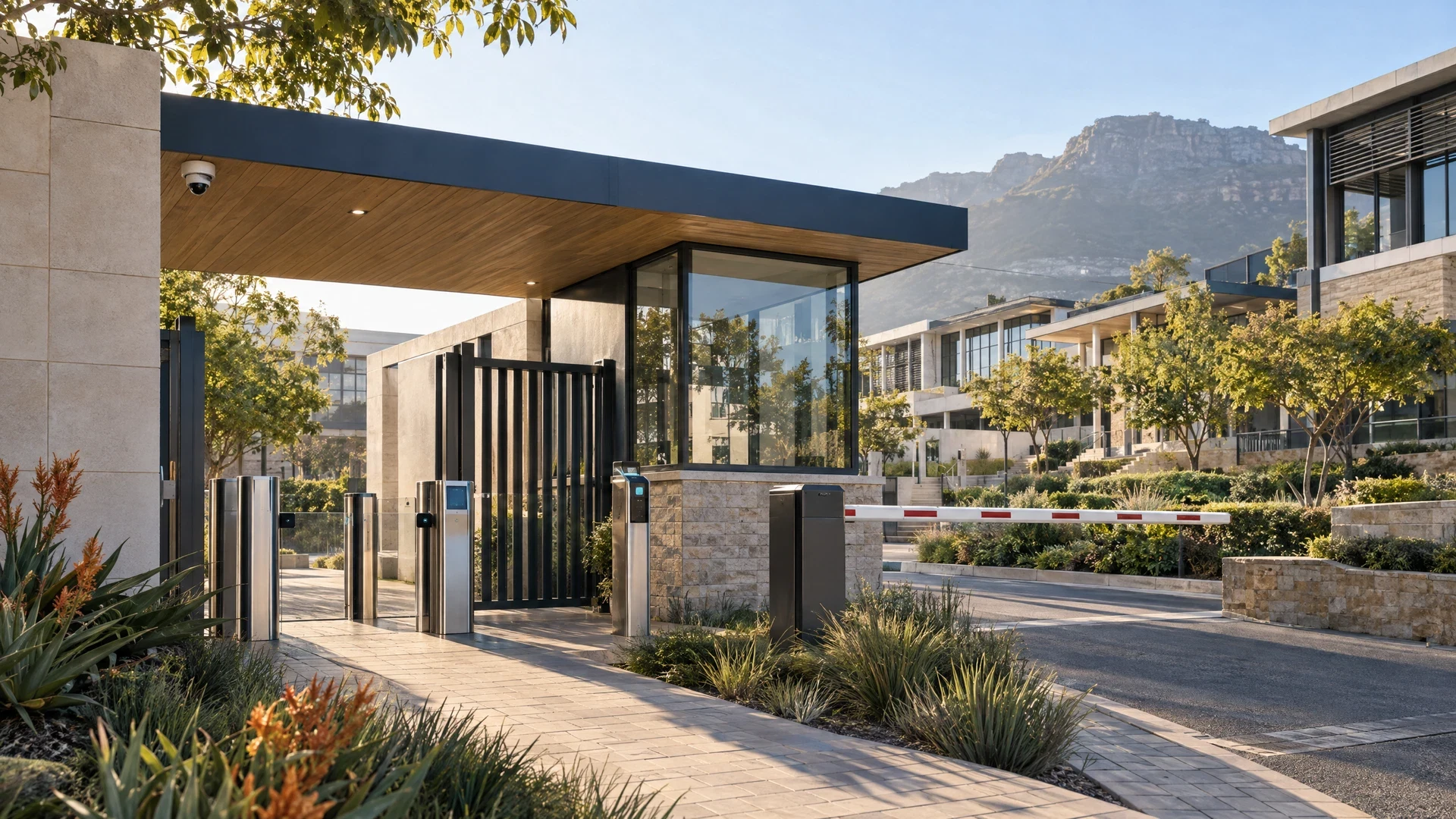
Conceptual editorial illustration: Government School Security05 / PUBLIC SECTORConceptual project illustration

Public Sector

Government Schools Security Integration

We have worked extensively with government schools to enhance campus security and connectivity. Our solutions ensure a safe learning environment while providing the digital backbone needed for modern education.

Project Scope:

  • Comprehensive CCTV surveillance system installation
  • Automated boom gate systems for vehicle access control
  • Campus-wide Wi-Fi network deployment
  • Digital attendance systems for staff and students

PROJECT CASE STUDY

Government-school security integration

Discuss a similar project ↗

The challenge

Government-school sites balance teaching, administration and busy arrival periods. Entrances, staff areas, learning spaces and outdoor routes each have different operational needs, making it important to consider surveillance, vehicle access and campus connectivity together.

The solution

The documented project scope brings together CCTV surveillance, automated boom gates for vehicle access, campus-wide Wi-Fi and digital attendance systems for staff and students. Together, these elements are intended to support site oversight, controlled vehicle entry and connected school facilities.

Implementation

The existing portfolio summary describes CCTV surveillance, automated boom gates, campus-wide Wi-Fi and digital attendance systems as the implementation scope. It is a portfolio-level account, with no site-specific delivery sequence supplied.

Outcomes & evidence

The stated scope combines oversight, vehicle-entry management, digital connectivity and attendance support for school operations. It describes the intended operational value of an integrated approach, not measured changes in safety or attendance.

Evidence basis: Portfolio-level case study based on Leetech’s existing government-school summary, not a named individual school. The image is conceptual; site-specific completion and measured outcomes have not been provided.

Explore sector context & planning considerations

Sector context

Government-school sites need connectivity and security arrangements that fit daily teaching, administration and arrival-time activity. Entrances, staff areas, learning spaces and outdoor movement routes have different operational needs, so surveillance, vehicle access and wireless coverage should be considered together rather than as separate equipment purchases.

Operational objectives

The existing project scope brings together CCTV, automated boom gates, campus-wide Wi-Fi and digital attendance systems for staff and students. The operational aim is coordinated site oversight, controlled vehicle entry and connected school facilities. No reduction in incidents, attendance improvement or other measured outcome is asserted here.

Planning for similar sites

For comparable school projects, scope development should address camera coverage and viewing permissions, vehicle and pedestrian interaction, wireless coverage and the rules for attendance records. Installation sequencing should consider school activities; equipment testing and the responsibilities of authorised staff should be defined before handover.

LET’S TALK TECHNOLOGY

Ready to Transform Your Institution?

Discuss your teaching spaces, campus connectivity and security priorities with our team to define a site-specific solution.

Request a Consultation